


Trust in Quality: Thai-Made Rubber Rice Rollers, Produced by Thais for Over 50 Years
SPORTMAN rubber rice rollers are manufactured by Detchai Rubber Co., Ltd., a domestic rubber roller manufacturer certified by the Thai Industrial Standards Institute and licensed to display the TIS 633-2531 mark.
Rubber rice rollers · License No. 1765-2/633

What Is the TIS Standard?
Understand the Thai Industrial Standard before you buy
TIS stands for "Thai Industrial Standard." It is set by the Thai Industrial Standards Institute (TISI) to define quality criteria, test methods, and production controls for each product category, so that users can be confident products are consistent and reliable.
Products certified to a TIS standard must be inspected by an independent body, and the manufacturer must maintain a quality control system on an ongoing basis. It is not a one-time approval. Consumers can therefore compare products against the same standard, and have a channel to verify or file a complaint if a product does not meet it.
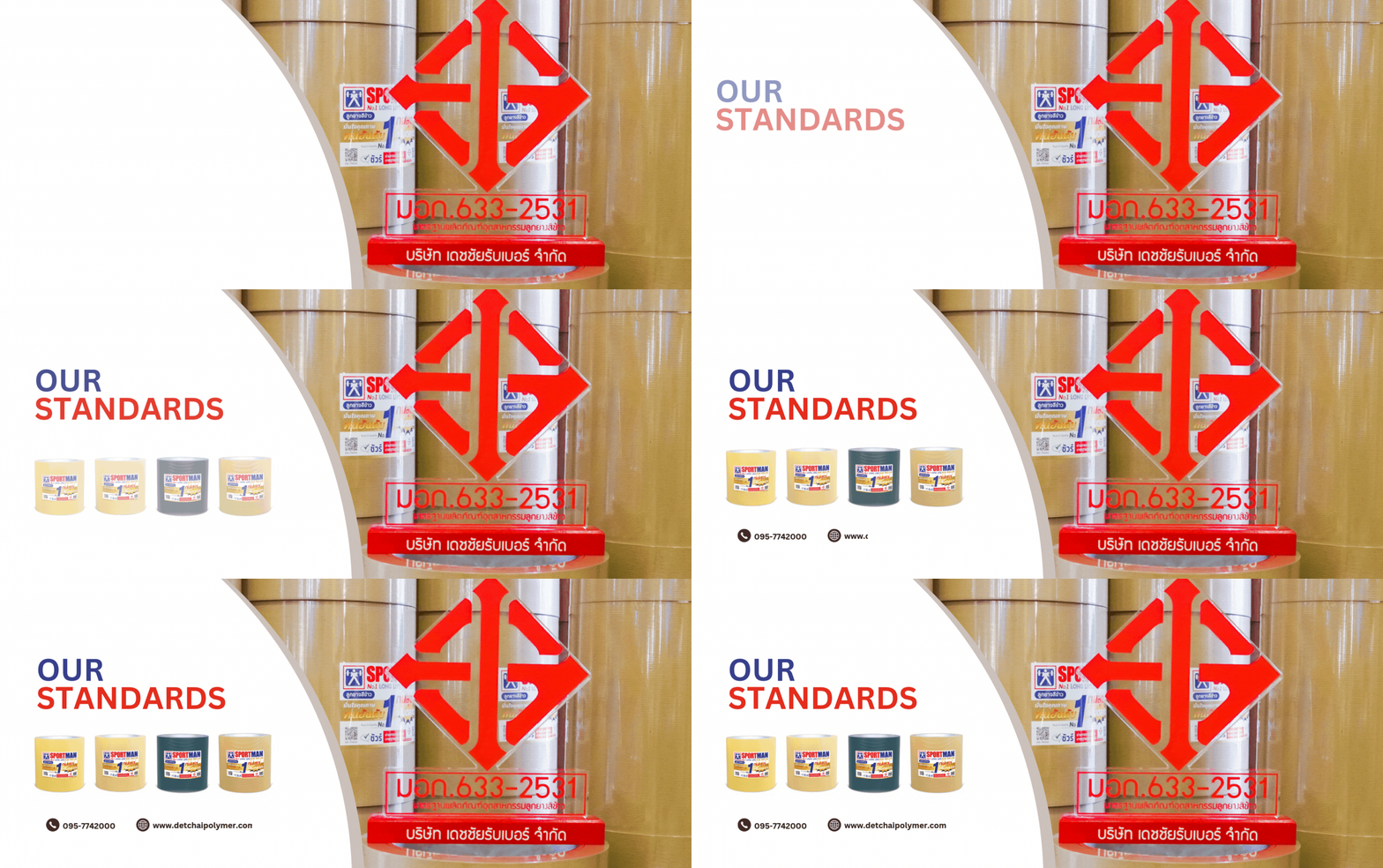
Why Choose TIS-Certified Rubber Rollers
Direct benefits for rice mills
Consistent quality
Produced under controls that follow the standard's criteria, reducing variation between production batches.
Verifiable
A clear reference standard, with a certification mark you can check on the product itself.
Peace of mind
Reduces the risk of buying products of unknown quality and lets you plan your milling with more confidence.
Mill reputation
Using standard-compliant equipment builds credibility for your business.
The True Cost of Rubber Rice Rollers
Many mills look only at the price per pair, but the true cost also includes service life, how often the machine must be stopped for replacement, and the amount of broken rice produced. Rollers with consistent quality make replacement and production easier to plan accurately, which is why many operators choose products with certified standards.
Why Rubber Rice Rollers Matter to Your Mill
Small parts with a big effect on yield and rice quality
Rubber rice rollers are used in the husking stage. They work as a pair, rotating in opposite directions to strip the husk from the paddy grain. The quality of the rubber therefore directly affects the broken rice rate, service life, and production line continuity.

- Feed the paddy
Paddy is fed into the gap between the two rollers. - Husk the grain
The rollers rotate at different speeds, creating friction that strips off the husk. - Separate the brown rice
Brown rice and husk are obtained and move on to the next stage of the mill.
From Paddy to Milled Rice
Understand where the rollers sit in the production line
Rice milling consists of several consecutive steps. Rubber rollers sit at the start of the production line, so they affect the quality of every step that follows.
- Clean the paddy
Remove dirt, straw, and empty grains before the paddy enters the husker. - Husk with rubber rollers
A pair of rollers rotating in opposite directions removes the husk. This step demands a consistent roller surface and durable rubber. - Separate the husk and unhusked paddy
Paddy that has not been husked is sent back for another pass. - Whiten and polish
Produces milled rice ready for grading and packing.
If the rollers wear unevenly, more re-husking may be needed, or the grains may receive uneven pressure, which affects the proportion of whole kernels obtained.
Factors That Affect Quality and Service Life
What to consider when choosing and using rubber rice rollers
Rubber compound quality
Rubber made with a controlled formulation and production process helps the rollers wear evenly.
Dimensional accuracy
Accurate dimensions ensure a proper fit on the machine and reduce vibration and uneven wear.
Grip on the shaft
Rollers must grip the shaft firmly and must not loosen or slip off during continuous operation.
Type of paddy
The moisture and cleanliness of the paddy affect how quickly the rollers wear.
Actual service life depends on the condition of the machine, the volume of rice milled, and each mill's settings. For advice specific to your machine, you can consult our team.
How to Care for Rubber Rice Rollers So They Last Longer
General guidelines for users
- Set the gap between the rollers to suit the type of paddy, neither too tight nor too wide.
- Feed the paddy evenly across the full width of the rollers so they wear uniformly.
- Remove stones, metal fragments, and other contaminants before the paddy enters the machine, as they can damage the roller surface.
- Inspect the roller surface regularly and replace the rollers as a pair when the time comes, so the work stays balanced.
- Store spare rollers in a shaded, dry place, away from direct sunlight and heat.
TIS-Certified Rollers vs. Rollers of Unknown Standard
Points to compare before you decide to buy
| Topic | TIS-certified rollers | Rollers of unknown standard |
|---|---|---|
| Source verification | License number and manufacturer can be checked in the TISI database. | Usually no reference information from a central authority. |
| Quality criteria | Can be referenced against the same standard. | Depends on what the seller says. |
| Batch-to-batch consistency | The manufacturer maintains a quality control system. | Uncertain; you have to test them yourself. |
| Complaint channel | A complaint channel is available through the TISI system. | No central channel. |
Verify the License Yourself
Reference information from the TISI database
Our license holder information is published on the TIS QR-CODE system of the Thai Industrial Standards Institute, and you can verify it yourself at any time.
License holder
Detchai Rubber Co., Ltd.
Product
Rubber rice rollers
License No.
1765-2/633
- Look for the TIS mark
Check for the mark and the standard number 633-2531 on the product. - Scan or open the verification link
View the license holder information directly from the TISI system. - Confirm the manufacturer's name
It must match Detchai Rubber Co., Ltd.
About Detchai Rubber Co., Ltd.
Manufacturer of SPORTMAN rubber rice rollers
We are a manufacturer of rubber rice rollers in Thailand, made by Thais for over 50 years. SPORTMAN rubber rice rollers that carry the TIS 633-2531 mark are evidence of our production standards and our care for quality. Learn more at www.detchipolymer.com

Frequently Asked Questions
FAQ
What is TIS 633-2531 the standard for?
It is the Thai Industrial Standard for rubber rice rollers.
Who manufactures SPORTMAN rubber rice rollers?
They are made by Detchai Rubber Co., Ltd., a domestic manufacturer that has been in business for over 50 years.
Where can I verify the TIS license?
You can verify it on the TISI's TIS QR-CODE system, license No. 1765-2/633 (the link is in the "Verify the License Yourself" section).
Why should rice mills choose TIS-certified rollers?
Because they have clear, verifiable quality criteria, which gives you confidence in the quality of the products you use.
What do rubber rollers do in a rice mill?
They remove the husk from paddy grains, with two rollers rotating in opposite directions, producing brown rice before the whitening stage.
When should rubber rice rollers be replaced?
When the surface is worn so much that husking is incomplete, or when broken rice and leftover paddy increase. Replace them as a pair so the work stays balanced.
How does using standard-compliant rollers help?
It lets you verify the source, compare quality criteria against the same standard, and file a complaint if a product does not meet the standard.
How can I order or ask about prices?
Contact our team using the button at the end of this article.
Interested in SPORTMAN Rubber Rice Rollers?
Consult our team to choose the size and model that fit your rice mill.
Contact us


